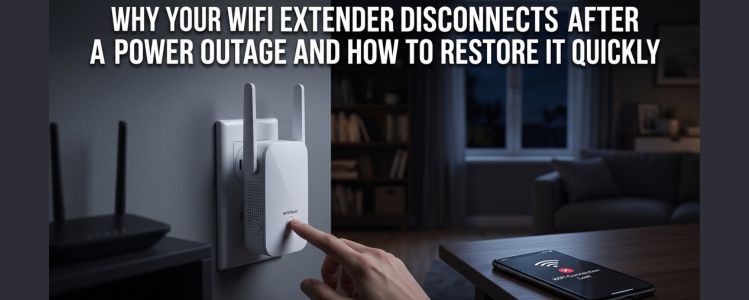
Power outages can temporarily interrupt communication between your router and WiFi extender, causing the extender to disconnect or stop broadcasting a stable wireless signal. Fortunately, most issues can be resolved by restarting the network in the correct order, verifying the extender’s connection, and completing mywifiext setup again if necessary. Devices broadcasting the default Netgear_ext network name usually indicate that the extender needs to reconnect to the main router.
A WiFi extender depends on a stable connection with your primary router. During a power outage, both devices lose power simultaneously. When electricity returns, they may restart at different times.
If the extender powers on before the router has fully established an internet connection, it may fail to reconnect automatically.
Other factors can also contribute, including:
These issues are usually temporary and can often be fixed without replacing any equipment.
After a power outage, you may notice several symptoms that indicate the extender is no longer communicating with the router.
Common signs include:
Recognizing these symptoms helps identify the problem quickly.
Many Netgear extenders broadcast a default wireless name such as Netgear_ext after losing their connection to the main router.
This typically means:
Seeing the default network is usually a sign that the extender is ready to be reconfigured rather than being permanently damaged.
In many cases, restoring service takes only a few minutes.
Turn off both devices.
Power on the router first and allow it to finish booting completely before turning on the extender.
This gives the router time to establish internet connectivity.
Once the router is fully operational, reconnect power to the extender.
Wait several minutes while it searches for the saved wireless network.
Many extenders reconnect automatically after a complete restart.
If the extender reconnects but performance remains poor, verify its location.
It should receive a strong signal from the router while remaining close enough to extend coverage into weak areas.
Avoid placing it:
Reconnect your phones, laptops, smart TVs, and other devices to verify they receive internet access through the extender.
If everything functions normally, no additional troubleshooting is required.
If the extender continues broadcasting the default network or refuses to reconnect, performing mywifiext setup may be necessary.
The setup process allows you to:
Following the setup wizard ensures the extender stores the correct wireless credentials again.
Firmware updates often improve:
Checking periodically for updates helps reduce future connectivity problems.
Power outages are often accompanied by electrical surges that may affect networking equipment.
Using a quality surge protector helps safeguard:
This inexpensive investment can reduce the likelihood of hardware-related failures.
To improve long-term reliability:
These simple maintenance habits help ensure consistent wireless performance.
A factory reset should only be considered after other troubleshooting steps have failed.
Resetting erases:
After the reset, you must complete mywifiext setup again to reconnect the extender to your home network.
Power outages can temporarily interrupt communication between your router and WiFi extender, but most connection problems are resolved with a simple restart and proper recovery sequence. If your extender begins broadcasting the default Netgear_ext network, it usually means the device needs to reconnect to the router rather than indicating a hardware failure.
By restarting the router first, verifying placement, keeping firmware updated, and repeating mywifiext setup when necessary, you can restore reliable wireless coverage quickly and minimize future disruptions. With a few preventive measures, your extender will continue delivering dependable WiFi throughout your home even after unexpected power interruptions.
Ans: The extender may have restarted before the router finished booting, preventing it from reconnecting to the main wireless network.
Ans: Repeat mywifiext setup if the extender cannot reconnect automatically, continues broadcasting its default network, or no longer provides internet access.
Ans: Most outages do not permanently damage the device, although electrical surges can sometimes affect networking equipment. Using a surge protector helps reduce this risk.
Ans: Keep firmware updated, place the extender where it receives a strong router signal, use surge protection, and restart networking equipment in the correct order after power is restored.
