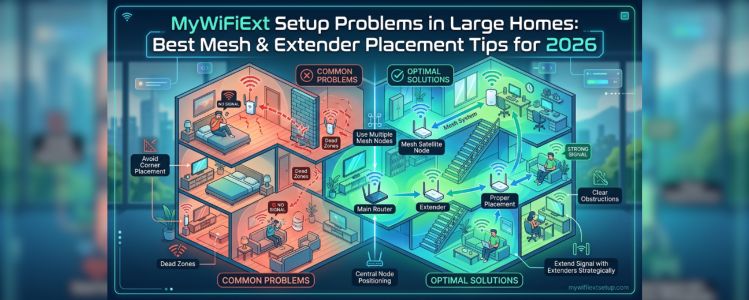
Large homes in 2026 require stronger and smarter WiFi coverage than ever before. With multiple floors, thick walls, smart home devices, gaming systems, streaming platforms, and remote work setups, many homeowners struggle to maintain stable wireless connectivity throughout the entire property.
One of the most common issues users face is incomplete or unstable mywifiext setup performance in large homes. Even after connecting a WiFi extender successfully, users may still experience:
In many cases, the problem is not the internet connection itself but poor extender placement, signal overlap, weak backhaul communication, or incorrect setup configurations through 192.168.1.250.
This guide explains why WiFi extenders struggle in large homes and the best mesh and extender placement tips for improving whole-home coverage in 2026.
Modern homes contain many obstacles that interfere with wireless signals, including:
As WiFi signals travel farther from the router, they weaken significantly. Large homes also contain:
This makes proper extender placement extremely important.
Today’s networks support:
These technologies require:
A poorly placed extender can create major speed and stability problems even with fast internet plans.
You may notice:
These symptoms usually indicate poor signal distribution.
The most important rule for proper mywifiext setup is extender positioning.
Best Placement:
Place the extender:
Avoid:
If the extender receives weak signal from the router, it cannot rebroadcast strong WiFi effectively.
Access 192.168.1.250 through your browser to review extender settings and performance.
Inside the dashboard, you can:
Regular monitoring helps identify weak placement areas quickly.
Modern homes contain many interference sources that weaken WiFi signals.
Common Interference Sources:
Keeping extenders away from interference sources improves network stability dramatically.
Combined Smart Connect systems sometimes confuse devices in large homes.
Best Practice:
Use separate network names for:
Why It Helps:
This is especially important for:
Traditional extenders work well for:
However, large homes often benefit more from mesh WiFi systems.
Mesh System Benefits:
Mesh systems eliminate many roaming problems common with traditional extenders.
Multi-story homes often experience weak upstairs or basement coverage.
Best Placement Tips:
Signals travel diagonally more effectively than vertically through solid flooring materials.
Modern homes may contain:
Too many devices connected to one extender can reduce:
Distributing devices across multiple access points improves performance.
Outdated firmware commonly causes:
Firmware updates improve:
Always update both:
for best performance.
Wireless backhaul becomes less reliable in very large homes.
Ethernet Backhaul Benefits:
Connecting extenders through Ethernet dramatically improves overall network consistency.
Routine restarts improve:
Recommended Restart Order:
Monthly maintenance helps reduce long-term stability problems.
WiFi 7 devices:
Weak extender placement becomes much more noticeable with modern devices.
Avoid these common setup errors:
Small setup mistakes often create major performance issues.
Modern smart homes depend on:
Poor WiFi planning can impact:
Proper network design is now essential.
Consider upgrading if:
Newer WiFi 6E and WiFi 7 systems provide much stronger coverage and device handling.
Mesh systems are becoming increasingly popular because they provide:
Large modern homes often perform better with mesh solutions than standalone extenders.
If your mywifiext setup struggles to provide stable coverage in a large home, the issue is usually related to poor extender placement, weak backhaul communication, interference, overloaded devices, or outdated configurations.
By optimizing placement, monitoring performance through 192.168.1.250, separating WiFi bands, reducing interference, and considering mesh networking for larger properties, users can dramatically improve whole-home WiFi performance throughout 2026.
With proper setup and optimization, modern extenders and mesh systems can deliver fast, stable, low-latency connectivity for streaming, gaming, smart homes, and remote work across every room in the house.
