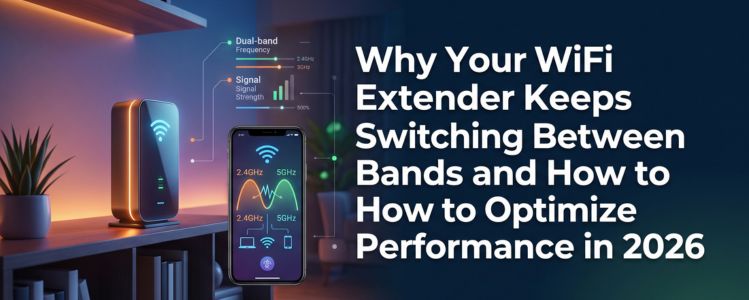
Modern dual-band and tri-band WiFi extenders automatically switch between frequency bands to provide the best possible connection. However, frequent band switching can sometimes lead to unstable connections, slower speeds, or interrupted video calls. Completing a proper mywifiext setup, positioning the extender correctly, and using 192.168.1.250 to verify network settings (where supported by your extender model) can help improve stability and overall wireless performance.
Most modern WiFi extenders are designed to connect devices using either the 2.4 GHz or 5 GHz frequency band.
The extender continuously evaluates factors such as:
When network conditions change, the extender may automatically move devices to the band it believes offers the best performance.
This process is commonly known as band steering.
The 2.4 GHz band offers:
However, it is often more congested because many household devices use the same frequency.
The 5 GHz band provides:
Its main limitation is shorter coverage compared to 2.4 GHz.
Modern extenders automatically balance these advantages depending on network conditions.
Although automatic band steering improves performance in many situations, excessive switching may indicate an underlying issue.
Common causes include:
Frequent switching can interrupt downloads, online meetings, and video streaming.
Many users install the extender too far from the router.
If the extender receives only a weak signal, it constantly searches for a stronger connection by changing bands.
For best performance, position the extender:
Proper placement often reduces unnecessary band switching.
Incorrect configuration can also contribute to unstable wireless behavior.
Performing a complete mywifiext setup ensures the extender is properly connected to the router and configured for optimal performance.
During setup you can:
Following the installation wizard helps establish a stable connection from the beginning.
Many extender models provide access to local configuration pages that display connection details and network status.
For compatible devices, 192.168.1.250 may be used to review:
Checking these settings helps identify problems before they affect performance.
Household electronics often interfere with wireless signals.
Common sources include:
Minimizing nearby interference improves signal consistency and reduces unnecessary band changes.
Manufacturers regularly release firmware updates that improve:
Installing updates helps ensure the extender operates efficiently.
Some devices require significantly more bandwidth than others.
Examples include:
Distributing heavy network usage across available bands helps reduce congestion and improve overall performance.
As smart homes continue expanding, the number of connected devices also increases. Regularly review your network and disconnect unused devices whenever possible. Fewer active devices allow the extender to manage available bandwidth more effectively.
Automatic band switching is a normal feature of modern WiFi extenders designed to deliver the best possible wireless experience. However, frequent switching between bands often indicates issues such as poor placement, weak router signals, outdated firmware, or wireless interference.
Completing a proper mywifiext setup, positioning the extender where it receives a strong signal, and reviewing configuration settings through 192.168.1.250 (when supported) can significantly improve network stability. With regular maintenance and thoughtful placement, users can enjoy faster speeds, stronger connections, and reliable WiFi throughout their homes in 2026.
Ans: The extender automatically selects the band that offers the best combination of speed, signal strength, and stability based on current network conditions.
Ans: Completing mywifiext setup correctly ensures the extender is properly configured, updated, and connected to the strongest available router signal.
Ans: For supported extender models, 192.168.1.250 can provide access to local configuration pages where users can review wireless status, connected devices, and network settings.
Ans: Place the extender correctly, update firmware regularly, reduce wireless interference, review network settings, and avoid overloading the network with unnecessary connected devices.
