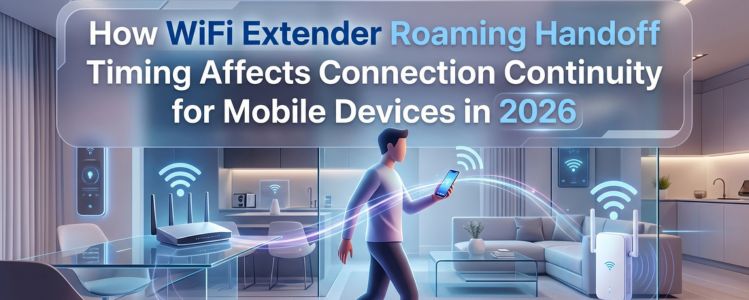
Modern homes increasingly depend on smartphones, tablets, laptops, smartwatches, and other mobile devices that move between rooms while remaining connected to WiFi. When a device moves between the primary router and an extender, mywifiext.local may be used to access supported extender settings, while the netgear extender setup wizard can help users configure compatible Netgear extenders for their existing network. In 2026, understanding roaming handoff timing is becoming increasingly important because poorly timed transitions can cause brief interruptions during video calls, streaming, online gaming, and other real-time activities.
WiFi roaming occurs when a mobile device moves from one wireless access point to another while maintaining network connectivity.
For example, a home network may include:
Primary Router → WiFi Extender → Mobile Device
As the device moves farther away from the router and closer to the extender, it may eventually need to change its wireless connection. The transition between access points is commonly referred to as a roaming handoff. A well-managed handoff can help maintain connectivity with minimal interruption.
A mobile device does not necessarily switch access points immediately when another signal becomes stronger. The device and network environment consider factors such as:
If the handoff happens too early, a device may connect to an access point that does not provide the strongest practical connection. If it happens too late, the device may remain connected to a weak signal for longer than necessary.
This balance is particularly important in larger homes.
Consider a user walking from a living room toward an upstairs bedroom. Initially, the smartphone may have a strong connection to the main router. As the user moves away, signal quality can gradually decrease.
When the extender becomes a better connection option, the device may transition to it. A simplified process is:
The time and conditions surrounding this transition influence the user’s experience.
On supported Netgear extender models, mywifiext.local can provide access to a local configuration interface when the user is connected appropriately to the extender’s network.
Depending on the model and firmware, users may be able to review or configure available wireless settings through the local interface. Available options vary by device, so users should refer to the documentation for their specific extender rather than assuming every model provides the same roaming controls.
A properly configured extender provides the foundation for consistent wireless coverage. The netgear extender setup wizard can guide users through the initial configuration process on supported Netgear extender models.
During setup, users may configure:
Correct setup helps ensure that the extender communicates properly with the main router.
A delayed handoff can leave a mobile device connected to an access point whose signal has become weak. Users may notice:
The device may still show a WiFi connection icon even though the practical quality of that connection has deteriorated.
An overly aggressive transition can also create problems. If a device switches access points before the existing connection becomes genuinely unsuitable, it may move between access points unnecessarily.
This can potentially lead to:
The ideal behavior depends on the device, access points, wireless environment, and network configuration.
Stationary devices generally remain connected to the same access point. Mobile devices are different because they constantly change their position relative to the network.
Examples include:
A user walking around the home may cross several coverage zones during a single video call. For these devices, efficient roaming can help maintain a smoother experience.
Video conferencing applications are particularly sensitive to connectivity interruptions. During a call, a brief network disruption can result in:
Proper access-point placement and compatible roaming behavior can help minimize unnecessary interruptions. However, roaming performance also depends on the mobile device and application being used.
Online gaming requires relatively consistent network responsiveness. When a player moves between rooms while using a mobile gaming device, a poorly timed handoff can temporarily increase latency or interrupt communication with the game server.
For stationary gaming systems, roaming is usually less relevant because the device normally remains connected to one access point.
Placement is one of the most important practical factors. If the extender is too far from the router, it may receive a weak connection itself. If it is placed too close, the extended coverage area may not provide much additional benefit.
A practical approach is to position the extender where it can maintain a reliable connection with the primary router while extending coverage into the desired area.
Network naming can influence how devices perceive available wireless connections. Depending on the extender and router configuration, users may configure network names according to the supported setup options.
However, simply using identical network names does not guarantee seamless roaming. The mobile device ultimately determines when and how it transitions between available access points, while network hardware and wireless standards can influence the process.
Firmware manages many networking functions within an extender. Manufacturers may release firmware updates that address:
Before troubleshooting roaming problems, users should verify that their router and extender are running compatible, supported firmware versions.
If mobile devices repeatedly lose connectivity while moving around the home, try these steps:
These checks can help determine whether the issue originates from signal coverage, device behavior, configuration, or the wireless environment.
Connected homes continue to include more mobile devices and smart technologies. People routinely move between workspaces, bedrooms, living rooms, outdoor areas, and other parts of their homes while using bandwidth-intensive applications.
As a result, network performance is increasingly measured not only by maximum speed but also by connection continuity. A well-planned router and extender deployment can help provide more consistent wireless coverage throughout the home.
WiFi extender roaming handoff timing plays an important role in maintaining connection continuity for mobile devices. If a device switches access points too late, it may remain on a weak connection, while an overly early transition can create unnecessary interruptions.
Users can establish a stronger foundation by completing the appropriate netgear extender setup wizard process, maintaining suitable extender placement, and reviewing supported settings through mywifiext.local. Because roaming behavior depends on the router, extender, client device, firmware, and wireless environment, there is no single handoff setting that works identically for every network.
Understanding these factors can help users create a more stable and responsive WiFi experience as mobile connectivity becomes increasingly important in 2026.
