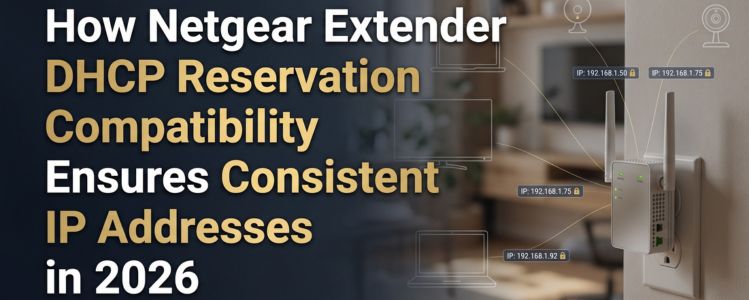
Smart home devices rely on stable network connections to communicate with mobile apps, cloud services, and other connected equipment. Security cameras, smart plugs, printers, and home automation hubs may occasionally experience connectivity problems when their network configuration changes. Understanding DHCP reservations can help users maintain consistent local IP addresses for compatible devices and simplify network troubleshooting. During mywifiext setup, it is important to understand how the extender works with the main router because DHCP reservations are usually managed by the router rather than the extender itself.
Users may also encounter the Netgear_ext network name when connecting to a compatible Netgear extender during initial configuration. Knowing the difference between the extender’s wireless network, its administration interface, and the router’s DHCP settings can help prevent configuration mistakes in 2026.
Dynamic Host Configuration Protocol (DHCP) allows a router to assign IP addresses automatically to connected devices. These addresses enable devices to communicate with the router and other network resources.
By default, a device may receive an address from a pool managed by the router. The address can change over time depending on the lease, network configuration, and device behavior.
A DHCP reservation links a specific device, typically identified by its MAC address, to a particular IP address. When the device requests an address from the DHCP server, the router can assign the reserved address instead of selecting another address from the available pool.
This arrangement can be useful for devices that benefit from a predictable local address, such as certain printers, home automation hubs, and locally managed security systems.
Many smart home products work through cloud-based services and do not require a fixed local IP address. However, some devices and network setups benefit from predictable addressing.
For example, a local automation platform may use a device’s IP address to communicate with a camera or smart home hub. If the address changes, a manually configured connection may stop working until its settings are updated.
A DHCP reservation can reduce this type of disruption by keeping the device’s assigned address consistent within the local network. Potential benefits include:
A reservation does not improve wireless signal strength or internet speed by itself. It helps with address management rather than solving every type of connectivity problem.
A Netgear WiFi extender typically expands the wireless coverage provided by the main router. Depending on the model and operating mode, it may forward network traffic between wireless clients and the router, while the main router continues to manage DHCP address assignments.
In a common home setup, a smart device connects to the extended WiFi network, but the router assigns its local IP address. In this situation, the DHCP reservation is configured on the router, not on the extender.
Some advanced network configurations may work differently, so users should confirm their equipment’s operating mode and documentation before making changes.
During mywifiext setup, users should first ensure that the extender is correctly connected to the router and that smart home devices can join the intended network. The Netgear_ext name may identify the extender’s setup or extended wireless network, depending on the device and configuration.
Follow these steps to create a reservation on a compatible router.
Find the device’s MAC address in its network settings, manufacturer’s app, or the router’s connected-device list. Some devices use randomized MAC addresses for privacy, so verify which address they use when connecting to your home network.
Connect to the main router and sign in using its administration address and credentials. Locate the LAN, DHCP, or address reservation section. Menu names vary by router model and firmware. Do not assume that the extender’s administration page contains the router’s DHCP reservation controls.
Choose an address that fits the router’s local subnet and does not conflict with another device. Follow the router manufacturer’s guidance for reservations and address-pool management.
Avoid assigning the same IP address manually to multiple devices. Address conflicts can prevent devices from communicating reliably.
Save the configuration, then reconnect or renew the smart device’s network connection if necessary. Check the router’s device list to confirm that the expected address has been assigned.
If the reservation does not work, verify the MAC address, DHCP server, and network configuration before changing additional settings.
DHCP reservations may fail when the wrong MAC address is entered, a device connects through a different network interface, or another DHCP server is active. Incorrect subnet settings can also prevent the reserved address from working.
If a smart device connects through a guest network, VLAN, or separate access point, its address may be managed differently. Some devices also use private MAC addresses that can change or differ between networks.
When troubleshooting mywifiext setup, first confirm that the extender provides reliable connectivity and that the affected device receives a valid IP address. Check the main router’s DHCP configuration before assuming the extender is responsible.
Keep router and extender firmware updated using the manufacturer’s instructions. Document important reservations and label devices clearly in the router’s administration interface where supported.
Review the connected-device list periodically to identify unfamiliar devices and remove outdated reservations when equipment is replaced. Use strong WiFi security and unique administrator credentials to protect network settings. These practices can help keep device addressing organized as a smart home grows.
DHCP reservations can make local network management more predictable for smart home devices that depend on consistent IP addressing. However, the reservation is usually configured on the main router, while a Netgear extender primarily expands wireless coverage.
By understanding the role of Netgear_ext, following the correct mywifiext setup process, and configuring DHCP reservations on the appropriate device, users can reduce address-related issues and maintain a more organized home network.
