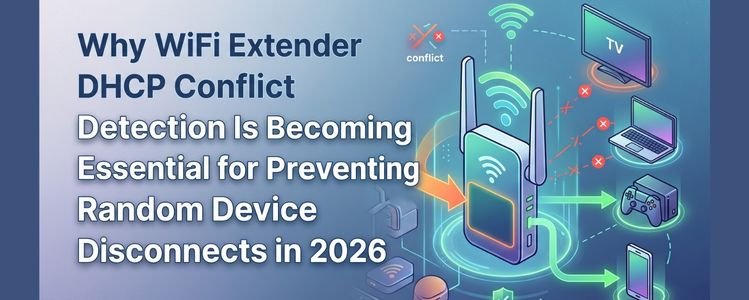
A stable home network depends on more than strong WiFi signals. Even when a router and WiFi extender provide excellent coverage, hidden network configuration problems can still cause frustrating issues such as random device disconnects, slow connections, or difficulty accessing the internet.
One common source of network problems involves IP address conflicts and DHCP configuration. In 2026, as homes connect more smartphones, laptops, smart TVs, security cameras, gaming systems, and IoT devices, managing network addresses correctly is becoming increasingly important.
Modern WiFi extenders and network-management systems can help identify certain configuration problems and provide diagnostic information that makes troubleshooting easier. Understanding DHCP conflict detection can help users prevent situations where devices unexpectedly lose connectivity.
For users completing a mywifiext setup or configuring their device through the netgear extender setup wizard, proper network configuration is an important foundation for reliable whole-home WiFi.
DHCP stands for Dynamic Host Configuration Protocol. It is a network service that automatically assigns IP addresses and other network settings to connected devices.
When a smartphone, computer, or smart TV joins a home network, DHCP typically provides information such as:
This automatic process allows devices to connect without users manually entering network settings.
Devices on the same local network generally need unique IP addresses. If two devices attempt to use the same address, communication problems can occur. Possible symptoms include:
The issue may appear inconsistent because the problem can occur only when both conflicting devices are active.
What Is an IP Address Conflict?
An IP address conflict occurs when two devices are assigned or configured to use the same address on the same network. For example, a device may have a manually configured address that overlaps with an address later assigned by DHCP.
This can cause the router to receive conflicting network information. The result may be unstable connectivity for one or both devices.
DHCP conflict detection and related network diagnostics can help identify situations where an address may already be in use. Network equipment may use different methods to detect potential conflicts, depending on the device and network configuration.
The goal is to reduce the chance of assigning an address that creates communication problems. This is especially valuable in homes with many connected devices.
The number of connected devices in a typical home continues to increase. A single household may include:
Each device needs network information to communicate properly. As networks become larger and more complex, configuration errors can become harder to identify. This is why DHCP diagnostics and conflict detection are increasingly useful.
A WiFi extender is primarily designed to extend wireless coverage. In a typical extender configuration, the main router continues to manage DHCP and assign IP addresses to devices on the home network.
The extender helps devices connect to the existing network from areas where the router’s signal is weaker.
This is an important distinction because an extender usually does not need to operate as a separate DHCP server in a standard home setup.
A correct mywifiext setup helps ensure that the extender connects properly to the existing router and network. During setup, users should carefully follow the instructions for their specific extender model.
The process generally involves:
Avoiding unnecessary manual network changes can reduce the risk of configuration conflicts.
The netgear extender setup wizard can guide users through the process of connecting a supported extender to their existing home network.
Depending on the model, the wizard may help users:
Using the guided setup process can be easier than manually changing advanced network settings. Users should always follow the instructions provided for their specific extender model and firmware version.
Several situations can create address-related network problems.
Common causes include:
If devices are disconnecting randomly, users can try several troubleshooting steps.
Modern network equipment may provide status information and diagnostic tools that help users identify connectivity issues.
Depending on the model, users may be able to review:
These tools can make troubleshooting more organized and help users identify whether the issue is related to signal coverage or network configuration.
Smart home devices can sometimes be difficult to troubleshoot because they may disconnect without a clear warning. When many IoT devices are active, proper IP address management becomes increasingly important.
A stable DHCP system can help ensure that devices receive valid network information when they connect. For larger smart homes, users may also benefit from reviewing their router’s DHCP settings and supported device limits.
Most basic home networks should require only one primary DHCP server, usually the main router. If the network includes:
Professional or advanced technical support may be useful. Making major changes without understanding the network can create additional problems.
These technologies may make it easier for users to identify hidden network problems before they cause widespread connection issues.
DHCP and IP address management are important parts of maintaining a reliable home network. As the number of connected devices continues to grow, detecting potential address conflicts can help reduce random disconnects and frustrating connectivity problems.
A proper mywifiext setup ensures that a WiFi extender works correctly with the existing home network rather than creating unnecessary configuration complications. Using the netgear extender setup wizard can also help users complete the initial configuration through a guided process.
For the most reliable results, the main router should generally manage DHCP, while the extender focuses on expanding wireless coverage. By maintaining proper network configuration, keeping equipment updated, and avoiding conflicting settings, users can create a more stable and dependable WiFi experience throughout their home.
Ans: A proper mywifiext setup helps connect the extender correctly to the existing network and can reduce the risk of unnecessary configuration errors.
Ans: The netgear extender setup wizard is a guided configuration process available for supported Netgear extender models to help users connect the extender to an existing WiFi network.
