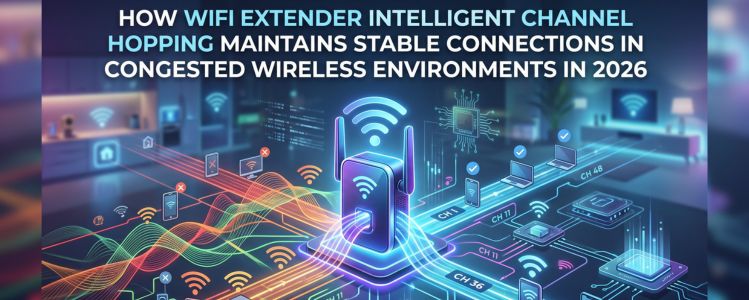
Wireless networks have become increasingly crowded in 2026. Homes and offices now contain smartphones, laptops, smart TVs, security cameras, gaming consoles, smart appliances, and numerous other connected devices. At the same time, neighboring networks compete for limited wireless spectrum, making interference a common cause of unstable WiFi performance.
WiFi extenders help expand coverage into areas where the main router struggles to provide a reliable signal. However, simply extending coverage does not eliminate interference. Intelligent channel hopping is emerging as an important technology for helping compatible extenders respond to changing wireless conditions and maintain more stable connections.
For users configuring a compatible extender, a proper mywifiext.net setup can help establish reliable communication between the extender and the existing network. The 192.168.1.250 address may also be used by certain extender models or configurations to access a local setup interface, depending on the device and network configuration.
Intelligent channel hopping refers to the ability of compatible wireless equipment to identify changing radio-frequency conditions and select or transition between available wireless channels when appropriate.
Instead of remaining permanently on a congested channel, an intelligent extender may evaluate factors such as:
The objective is to maintain a more reliable wireless connection under changing conditions.
Wireless congestion occurs when many devices and networks compete for the same available spectrum.
Common sources include:
Apartment buildings and densely populated neighborhoods can be especially challenging because many independent networks may operate within the same physical area.
A congested wireless channel can contribute to:
The problem can become more noticeable when several devices are simultaneously transferring large amounts of data.
Intelligent channel management allows compatible extenders to respond to changes in the wireless environment.
When interference increases, the system can evaluate available channels and potentially select a less congested option.
This can help support:
The exact channel-management behavior depends on the extender model, firmware, wireless band, and supported features.
A proper mywifiext.net setup is an important step when configuring compatible WiFi extenders. During setup, users may configure:
Correct configuration helps ensure that the extender communicates effectively with the primary router.
The 192.168.1.250 address is commonly associated with certain WiFi extender setup environments, but its availability depends on the device and configuration. When supported, users may enter the local IP address into a web browser to access the extender’s management interface.
If the address does not open, users should verify:
Not every extender uses the same local management address.
Intelligent channel hopping cannot completely solve poor extender placement. The extender should be located where it can receive a sufficiently strong signal from the primary router while still reaching the area requiring additional coverage.
Avoid placing the extender:
Strategic placement provides a stronger foundation for stable wireless communication.
Streaming services require consistent network performance. Channel congestion can cause buffering, reduced quality, or interruptions.
An extender that intelligently manages available wireless channels can help reduce the impact of changing interference conditions.
This can be particularly useful for:
Online gaming is sensitive to latency and connection instability. A congested wireless channel can increase delays and packet retransmissions.
Intelligent channel management can help maintain a more stable wireless environment, potentially improving the consistency of gaming connections.
However, overall gaming performance also depends on internet speed, server distance, wired connections, router performance, and network traffic.
Smart homes increasingly depend on wireless connectivity. Devices such as:
May operate throughout a home. Intelligent wireless management can help an extender respond to changing interference conditions and maintain more dependable connectivity for these devices.
Channel management features depend heavily on firmware. Manufacturers may release firmware updates to improve:
Keeping compatible equipment updated can help users take advantage of available improvements.
In addition to intelligent channel management, users can improve network performance by:
These steps can complement the extender’s channel-management capabilities.
Wireless networking is moving toward increasingly automated management. Future WiFi extenders may use:
These developments could allow wireless networks to respond more dynamically to crowded environments.
Intelligent channel hopping is becoming an important technology for maintaining stable WiFi connections in congested wireless environments in 2026. By monitoring wireless conditions and responding to interference, compatible extenders can help reduce the impact of crowded channels and provide more consistent network performance.
For users configuring a compatible extender, completing a proper mywifiext.net setup can help establish the necessary network connection and management settings. The 192.168.1.250 address may provide access to a local extender interface on supported configurations, although users should confirm the correct address for their specific device.
When combined with proper extender placement, updated firmware, appropriate network configuration, and good device management, intelligent channel management can help households maintain a more stable and efficient wireless network—even in areas with significant WiFi congestion.
Ans: 192.168.1.250 is a local IP address associated with certain WiFi extender setup environments. Whether it works depends on the specific extender and its current network configuration.
Ans: Possible causes include weak router-to-extender signal, wireless interference, incorrect placement, outdated firmware, network congestion, or configuration problems.
Ans: On compatible devices, channel-management features may operate automatically according to the manufacturer’s implementation. Users should check their extender’s documentation for specific capabilities.
